Sunday, May 21, 2017

Tractor Driving

     “Teaching isn’t work.” 
      At first, I thought he was joking or trying to get a reaction from some of my peers, standing around at the party.  The speaker, a farmer, was my age and was a friend since high school with one of my closest fellow faculty members.  
      I soon realized it wasn’t just a provocative statement, but a heartfelt belief.  Thankfully, it was not a belief his wife, a member of the school board, shared.  He wasn’t joking.  None of my fellow teachers reacted vociferously.  It was, after all, a party, not the time to start a loud argument.  Besides, we had all heard it before, many times during discussions with the school board. 
      Someone asked the farmer if he had ever tried teaching, say at 4-H (he was a big supporter) or maybe Sunday school.  “No,” he said.
     “Why not?  It’s pretty easy.”   No, it wasn’t something he could do.
     One lady volunteered to contact the Sunday school superintendent of his church, also in attendance at the celebration, and get him a job.  No, no, no, he backed off.  He wasn’t cut out for that sort of thing, he assured us.
     I could only think of one thing to say to the farmer, a quote I attribute to Mark Twain:  “If you want to know how easy a thing is to do, just ask a person who has never done it.”  It didn’t make much of a dent in his armor.
     Many years ago, Mad Magazine indulged in wicked satire.  One sketch I particularly remember was a guy who went through several panels where he was caught dumbfounded by something someone said.  In reaction to each incident, he told his wife, “What I should have said when he said that was. . . .”  Finally, his wife got tired of hearing the same phrase over and over again and angrily told him he was a dummy who could never think of the right thing to say at the proper time.  Once again, he was dumbfounded.  In the last panel, the couple was in bed, the wife blissfully sleeping, the poor guy, bleary-eyed and wide awake lying by her side, is thinking, “When she said that, I should have said. . . .”      
      I thought of something I might have told my doubting farmer-friend too late.  It was an incident from my youth.
     It happened in the early 60’s.  My grandfather, Papa, was living in the nursing home in Limon at the time.  We were having some kind of a celebration at our house that evening.  Papa was in attendance.
     I had spent the day riding a tractor, a John Deere 4010, which was a nearly new tractor at the time.  It had many new creature comforts for the time, a comfortable adjustable seat, super-sensitive power steering, controls located conveniently.  It lacked an air-conditioned cab.  It lacked an effective muffler.
      I arrived home, dirt covering me from head to toe.  My ears were still ringing from eight or nine hours of listening to the 4010’s exhaust.  I was tired.
     I walked in the door and headed for the bathtub.  Papa asked, “What have you been doing.”
     “Working,” I replied.
     “What kind of work?” he asked.
     “Driving tractor,” I replied.
     “Driving a tractor is not wo-rk!”  He stooped and frowned, looking at me through his bushy eyebrows, to emphasize the seriousness of my error.
      I looked at him.  He wasn’t joking.  I thought about protesting, but what was the use?  I suppose I might have been a lot more tired if I had been following a two-bottom plow pulled by a team of horses, after all.
      I took the bath and joined the celebration, but I was disturbed to know I hadn’t been doing a thing, not anything that could be called work, anyway.
     Sometime after the encounter with the teacher-deprecating farmer, I regretted not thinking fast enough to tell him he reminded me of my grandfather.  Since he spent a lot of time driving a tractor, having the shoe on the other foot would serve him right.      
      He might have asked if Papa ever drove a tractor.  I would have had to reply, “No, but what difference would that make?  You don ‘t have to do a thing to know how easy it is to do.”

      Driving a tractor is not work.  Teaching isn’t work.  It’s a bit humbling to know I have spent a great many of my waking hours in the last fifty-plus years doing things that aren’t work.  
      What a life!

Sunday, May 14, 2017

Cottontail Discovery

  Warning:  The following contains material that may not be suitable for all readers.  If you refer to the supporting appendages of a table as its “limbs”, or if you are embarrassed or offended by discussions of bodily functions (not sex), you probably should refrain from reading this.

      This starts out nicely enough with a warm fuzzy:  cottontail rabbits.  But then it deteriorates abruptly.
      In past times, I have cursed cottontails.  I have threatened and raved against them.  I even went so far as to shoot at one who found his way through the web of wire lining the garden enclosure.   The .22 was not sighted in for the distance, about ten feet.  While the sights were carefully aligned on a dot above his nose and between his eyes, the slug passed between his ears, which flickered as the mini missile popped by.  He took off like the proverbial bat and leaped over the chicken wire mesh, and somehow, made it through the spaces in the metal rod panels that make up the fence.
      Another of Peter’s cousins who made his way under a wall into a machine shed wasn’t so lucky.  Though the wound was closer to the right eye than to the left, it was fatal.  I thought to myself as I carried the corpse to its final resting place where the coyotes could find it, this really wasn’t the way I wanted to conduct the war.  His offense probably didn’t qualify as a capital crime.
      I haven’t shot another one.  Not even when, late on a September evening, I came to the farm from Kansas in need of the ’80 Pontiac.  It wouldn’t start.  It had been sitting there since June, under a tree, close to the house. A day or two later, I found out why.  The rabbits had chewed a number of park plug wires in two.  How did I know the furry creatures were to blame, you might ask.  When I pushed the hood up, one jumped off the engine and took off running.
      In Kansas I had a dilemma, three vehicles and a two-car garage.  If I left the pickup out, the packrats chewed off vacuum hoses and injector wires.  If I left the Dynasty out, the rabbits chewed through the wires to the crank sensor.  Usually, they chewed the wire off close enough to the sensor so that I could not splice it.  The sensor cost $54.  I bought three of them.
      I would have gladly executed the offender, if I could have caught him.  I found a surer way of repelling the obnoxious critters—rabbit repellent.  Sprinkling the granules where the engine and transaxle meet, as well as on the ground under the engine compartment, kept them at bay.
     Lately I have discovered one thing that cottontails are good for.  No, not eating.  Tried that once.  Once was enough.
     This where it gets a bit indelicate.  Cottontails eat grass.  I discovered that they can be persuaded to eat a certain grass, a nuisance grass, say the grass growing in the iris patch.  Like many great discoveries, it came about almost accidentally.
     A couple of year ago, I noticed a place where there had been grass for many years.  The grass was gone.  There was even a hollow where the grass grew on the level.  There was no loose dirt as if a dog or other digging animal had dug there.  There was no dirt piled up near the site.  It was smooth earth formed into the shape of a shallow bowl. Whatever dirt had been excavated had been removed from the site.  
     It took a while to make the connection.  Not many people will understand this, certainly not most urban dwellers, and for sure, not many females from any jurisdiction. 
     It will take an outdoorsman, certainly most farmers, hunters, fishermen, foresters, maybe cross country skiers, and the like, to understand.  There will be a few of the fairer sex who will understand.  I know this because years ago, I subscribed to a farm magazine that specialized in sharing creative ideas from the readers. 
     One idea featured a picture of a tractor with a toilet seat attached to the side.  It folded up when not being used, and folded down for use.  The picture was submitted by a female tractor driver who found it inconvenient to answer nature’s call during her workday out in the back forty.  She had affixed the toilet seat to the tractor just for such occasions.  She didn’t say, but I bet it included a heated seat, judging from the seat’s close proximity to the tractor’s engine.
      My daughter once worked as a wrangler on a dude ranch where she took dudes on daylong rides with a picnic lunch.  Unfortunately, there was no washroom, no facilities.  Many of her dudes were ladies, who had to answer nature’s call squatting in the bushes.
     I think it was a French lady who mentioned and later sent to her a device designed to allow a lady to relieve herself standing up.  It was cleverly named a “she-he” or something like that.  I am unable to recall what it looked like well enough to describe it, though it was small enough to be easily carried on an outdoor trip such as a horseback ride.  I never tried using one.  Those who tried it swore that it did the job well enough.
      Yes, some ladies will understand, but by now, every reader should understand that what I am referring to is urinating outdoors.
      I don’t know many farmers who will walk twenty or thirty yards to the nearest comfort station, remove muddy or otherwise befouled boots, just to relieve himself.  Not to mention wasting two liters of water to flush a pint of pee.  It’s much faster and easier, more economical to find an out-of-the way place where he can complete his business modestly and be mostly unobserved.  Being creatures of habit, many outdoorsmen will find a favorite place for such activity.
       Now, back to the rabbits.  It was just such a place where the grass and some of the soil was missing, a place I had visited more than once.  The rabbits of course had left their calling cards, too.  It wasn’t rocket science to make the connection of rabbit droppings, chewed and missing grass and soil, and my contribution to the place.
     It was no problem to test the hypothesis.  I found a piece of grass that was out of place and out of sight.  Sure enough, after a few days, that anointed patch of grass was chewed down to soil level.  Telltale droppings were bountiful.  Hypothesis proved.
     Irises are not my favorite flower.  They are pretty and colorful for a week or so in May or June, then they are these blades sticking up in the air for the rest of the summer.  I much prefer tulips.  They come up as early as February when a person longs to see something green.   They bloom in March and April.  By June, they have dried up and gone away.  You can mow over their bed, no weeding necessary.
      I inherited an iris patch.  It is infested with grass that outgrows the iris blades every summer.  Pulling the grass out requires a lot of strength and effort.  I bought an expensive herbicide that is supposed to kill the grass and not harm the irises.  I have had mixed success with that product.  It takes some time to mix the product, spray the irises, clean out the sprayer and put everything away.  The irises are not worth the time and trouble, especially with the mixed results.
      Iris patch, rabbits willing to eat grass.  Hmmm.  Time to try another experiment.  The iris patch is somewhat exposed.  My desire to try further the hypothesis overrode my innate modesty.  I just have to be sure no one is around, not really much of a problem at the farm. 
     Hypothesis confirmed, redundancy, whatever the proper scientific phrase may be.


     Grass growth greatly reduced.  It remains to be seen how the irises react to the treatment.      
     Rabbits can be put to some useful task.  However, I have more than enough for the job.  Therefore, I would gladly entertain anyone who likes rabbit in their diet.  I can spare them.  Let me know and we can arrange a rabbit safari.
     I can certainly understand if anyone is reluctant to harvest these rabbits.  While they are grass fed, they certainly have ingested a supplement.  I’m not sure if they would be considered “organic”.  I doubt I will apply for organic certification.  The inspection could be embarrassing.        
     Caveat emptor applies in this case.   Just let me know when you would like to go hunting.               


Sunday, May 7, 2017

The Wheat Conundrum

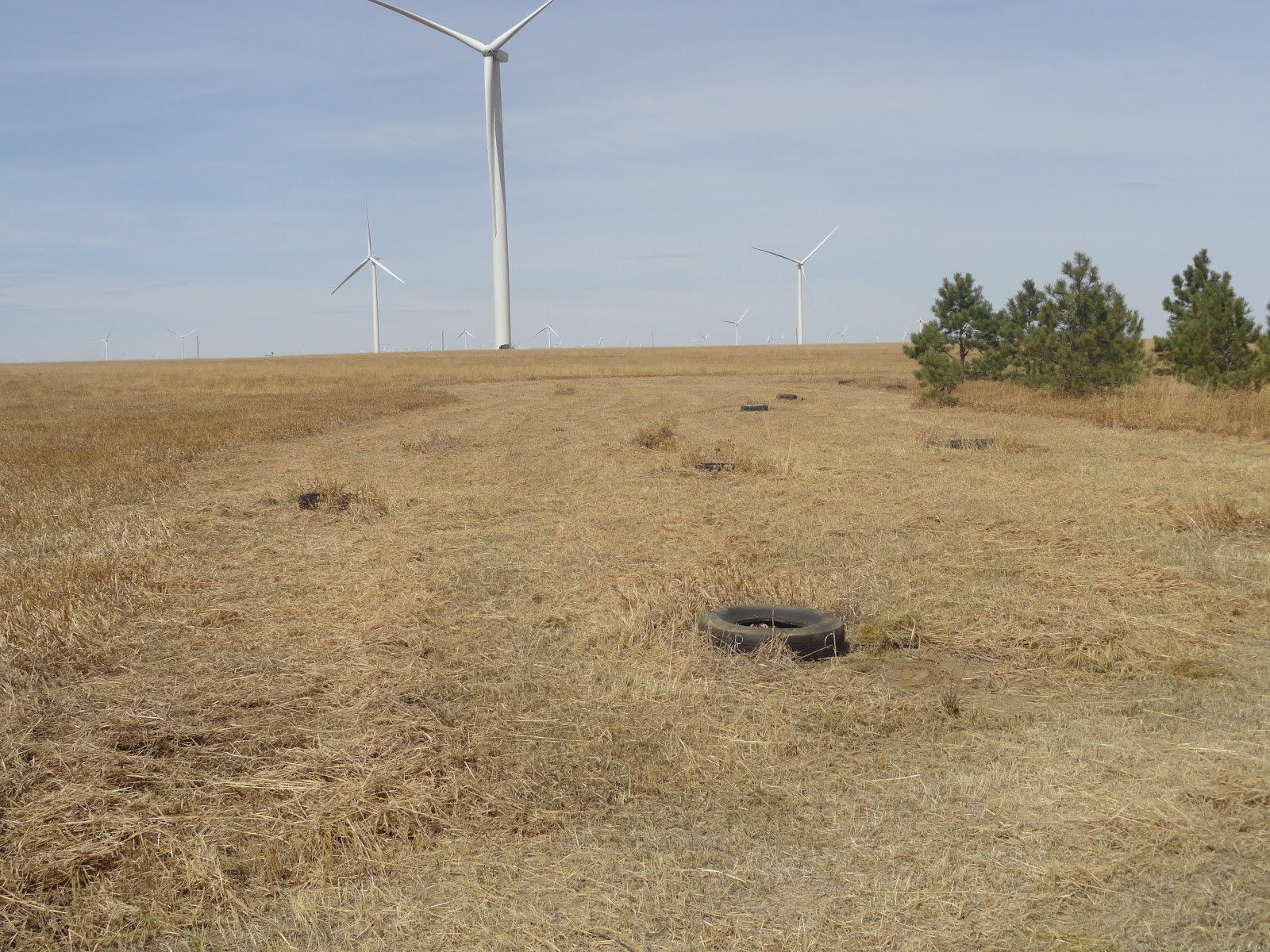
         This time of year, the wheat all should be looking like this:


         But instead it looks like this:


    The “bare” patches are filling in with weeds, lamb’s quarter, sunflowers, the usual harvest nightmares.  Since any chemical control is out if the organic status is to be maintained, one would have to swath the crop and pick it up with the combine when the green weeds have dried.
     In the past since I began this project of sod busting and being a clodhopper, Neighborly would be here to visit with and say what he might do and what maybe I should do.  But Neighborly took the walk into the next world, leaving me to grapple with farming decisions on my own.
     Visiting with his heir, I find that many of the neighbors have applied for crop insurance.  The insurance adjuster has determined what benefits the current crop deserves and has“released” it.  The farmers are now able to destroy the wheat and plant another crop.  They have destroyed the crop, either by spraying with an herbicide such as Roundup or by plowing it out. 
     Judging from past experience, the country will be filled with Prozo millet.  Further calling upon past experience, that means a huge supply of millet next fall.  That supply means a lousy price for that commodity.
     There are other millets that might not be so abundant, especially in the organic market, but no local buyer.  One would have to have bin room to store the crop until it could be moved to a further distant market.
     Lots of decisions to be made in the next few days.
     Meanwhile life goes on.  This year’s summer fallow is still too wet to disk.  The asparagus got off to an early start.  Usually, I spray it for weeds a week or two before it begins to appear, but it was ahead of me this year.
     Mother Nature to the rescue.  We cut three early batches.  The cold snap hit during the last week of April and froze everything that was above ground.  I cut off all the flaccid spears and sprayed the weeds.  The spears are once again erupting through the topsoil.  They can no longer hide themselves among the weeds.


I guess I had better go mow the lawn while I wait for the summer fallow to dry out.     
         

Monday, May 1, 2017

Conversations with a Three-Year-Old


 3yo:  Look!  A chainsaw!
Mom:  I don’t think so, honey.
3yo:  (approaching the man in his yard)  Is that a chainsaw?
Man:  (looking around from his work)  What?  Oh no, this isn’t a chainsaw (holding up electric     
            hedge clippers).
3yo:  What is it?
Man:  Hedge trimmer, electric clipper.
3yo:  What are you doing?
Man:  I’m clipping this hedge.
3yo:  Why?
Man:  (pausing to think) Well, I have to take out all the old dead stuff.
3yo:  Why?
Man:  So the bush can grow new branches and look pretty.
3yo:  How does that work?
Man:  (not understanding the question)  What?
3yo:  How does the trimmer work?
Man:  (holds up the trimmer, pulls the trigger a time or two)  See, these blades go back and
            forth and cut the branches.
Mom:  We probably ought to keep going.
3yo:  (To the man) Well, you better get back to work.  We’re going to the park.  Have a nice day.
Man:  That kid’s a slave-driver.


     On the way to daycare with the neighbor lady:

3yo:  Do you have any Kids?
Kay:  No.
3yo:  Why not?
 Kay:  I don’t know.
3yo:  I think you should have some.
Kay:  Well, I have you.
3yo:  That’s now.  What about when you go home?
Kay:  Well, I don’t know. 
3yo:  Who will help with the chores?
Kay:  I guess you have a point.
3yo:  I think you should go to the store and pick up one.

          Story-reading time before bedtime:
  
3yo:  You were trying to start the swather, you were trying to get the swather out (of the barn).
Me:  You remember that?
3yo:  Yeah, you were trying to get the swather started so you could drive it out so you could get
            the combine out.
Me:  That’s right, I was.
3yo:   You couldn’t get the swather started.  You should put the swather in (the barn) first.
            (Sniggers from the two females observing the conversation)
Female 1:  Shown up by a three-year old, eh?


Sunday, April 23, 2017

KC Scholarship

     Not always does your past come back to haunt you.

      It came in the mail in a big, white envelope, the kind with a bubble wrap lining inside.  Life insurance maybe, or a calendar or something, from somebody wanting money.  My first impulse was to head to the recycle bin with it. 
     There wasn’t an accompanying return envelope with a little checkoff box with suggested donations, no sob story with heart-rending pictures.  There was nothing in the envelope but the certificate inside a folder.
      I decided to keep it for a while.  I didn’t know any Cheryl McConnell.  Of course, I knew some Cheryls when I was teaching school.  Any of them could have changed their last names.
     Sure enough, a few days later, there came a letter from a Cheryl McConnell who signed her maiden name.  Sure enough, she was a former student who had graduated in the late 70’s.
     In her note, she explained that the KC Scholarship was funded in part by the Ewing Kaufman foundation, which triples her donations.  Apparently, Cheryl donated enough to allow her to select the name for the scholarship.  I was chosen for the honor.   
     She went on to say that I had taught valuable lessons, like how to write a term paper, or to have fun with literature.  And the really big one (my emphasis, not hers) “a lot” is two words, not one (like “a little, a gob, a bunch” are all two-word phrases, so is “a lot”).  “Allot” is one word and means something entirely different, to distribute, divide, spread, share and has nothing to do with a______lot, two separate words.  We all have our petty pet peeves, I guess.
     I can only imagine what kind of battle I would be fighting now if I were still teaching writing, text message abbreviations, u no what I mean?  LOL etc.  
      Texting does exemplify one thing I tried to teach, brevity.  Avoid wordiness.  The other part of that was to have a thought or feeling worthy of communicating.  Text receivers can be the judge of that.  I am spared that battle, anyhow.
     A certificate and a brief letter from a former student once again disinter memories of the long-buried past.  I am reminded of one more thing from my teaching career.  I once told a girl who had fallen in with the wrong crowd and was engaging in some questionable behaviors, that on judgment day, a huge Sony Jumbotron would flash her life across the sky for God and everybody, including her mother, to see.
      The Jumbotron may be replaced by a 5 x 5 card arriving in the mail some time before judgment day.  Not all the things coming across the screen will be bad or embarrassing.
       Disclaimer (following congress’s example):  I am exempt from any and all the rules of good writing that I used to try to teach.  I will be wordy if I wish, and I may express ideas that are totally without value, if I choose.   


Sunday, April 16, 2017

Holy Moses!


     Yul Brynner was turning Charlton Heston out into the desert with one day’s ration of food and water when we turned the telly on.  We had just returned from a mini show at our local library where an elderly lady did an impersonation of Matti Silks.
     Matti Silks was the madam of a “parlor house”, otherwise known as a house of ill repute during the late 19th and early 20th century.  She began her “career” in Kansas, Dodge City, Hutchinson, Hays, Great Bend.
      She relocated her “family” to Colorado, Leadville, Denver, Florence, Cripple Creek, and even to Alaska for a while.  (She left Alaska because she had to pay both the local gendarmes and the Royal Mounted Police, too expensive, she said.)  Matti recounted some of the details of her personal and professional life, including a duel she fought with another madam over a man they both favored.  (They both missed their target.  The object of their affection received a bullet wound to the cheek.)
      “Matti” recalled many of her fellow “Madams of Colorado”, the title of her show.  The last of the great parlor houses closed down in the 1980’s.  It was in Lusk, Wyoming.  Matti credited the Lusk house’s longevity to the fact the madam owned the local power plant and threatened to shut off the city’s power whenever authorities tried to shut her down.
      The library mini show started at 7 p.m.  We were home a little after 8 p.m.  “The Ten Commandments” must have been on for an hour or more when we tuned in.  It reminded me of the first time I saw it, in a theater.
     I didn’t see the beginning of that one either.  It must have been 1956 or 1957.  It was an October day.  I had been to a “slumber party” on Friday night.  Saturday morning was beautiful, but Saturday afternoon was overcast and starting to cool off.  Several of my fellow slumberers left for home before noon, but my ride home was my dad who was at the time engaged in converting Eric Carlson’s garage to Evelyn’s beauty parlor. 
     We didn’t go directly home.  My younger siblings were at the theater in Limon taking in “The Ten Commandments.”  We sat in the car parked near the theater waiting for the movie to end and we could all go home.  I mentioned to Dad that I hadn’t seen the movie, so he fished out 50 cents (or whatever the price of admission was) and I entered the theater in the middle of the movie.
      I don’t know that I have ever seen the beginning of the movie.  I don’t remember if I saw the end of the movie either.  I recollect Dad coming into the theater before the movie was over.  The Lincoln theater had the distinction of being one of few movie houses where the patrons enter from the front of the theater, so the movie-goers could see who was coming or going without turning around and gawking.
      We saw Dad come in, so finding us in the dark theater wasn't too hard to do.  He said it was beginning to snow heavily and we needed to get home before it turned into a regular blizzard.  I don’t remember if we convinced him that the movie was almost over and we could stay until the end.  I do remember seeing the stone tablets getting chiseled by the lightning, one of the many special effects in the movie.
      I didn’t make the end last night, either.  With five minutes of commercials every twenty minutes or so, the movie ran well beyond my bedtime.  I stuck it out through the Passover and the great exodus.  I watched as the great sea closed over Yul’s army of chariots, horses, and soldiers.  At the first commercial after that scene, I called it quits.
       It was a great movie.  Even though some of the special effects seem rather corny now, they were great for the mid-fifties.  The Goodwife mentioned the painted backdrops.  Maybe they looked better on the big screen.  We hadn’t had television for more than two or three years at the time, and it seemed a great movie then.
      I doubt I will ever see the whole thing start-to-finish.  With my limited capacity to stay awake in any movie, and my diminished ability to concentrate on anything for very long any more, I don’t see me sticking with any movie for four hours.
    Hey wait!  Maybe it could be featured on trans-Atlantic flights.  That would take up a big chunk of seat time.
     Whoever said life was about the journey, not the destination, never flew non-stop from Denver to London.  


Sunday, April 9, 2017

Dry Spring

     “. . . [T]he most significant amount of moisture since July,” said the radio announcer.  It was March 24.
     The old joke says that when it rained for forty days and forty nights and Noah boarded his ark, Eastern Colorado got 1.75 inches.  Around the first of March, when Kansas and Oklahoma and parts of Texas and Colorado were on fire, it wasn’t funny.
     We were a little more fortunate than Denver, catching a narrow, streaky thunderstorm about the third of August of over an inch.  It wasn’t enough to get wheat up in September.  Things dried out pretty rapidly after that because everything around us that didn’t get rained on was so dry. 
      Since August, we have had nothing of note until March 24. The fire danger was quite real.  An assessment of the farm revealed plenty of fuel around the farmstead.  There wasn’t enough snow all winter to tamp down the dead foliage.


     I celebrated Saint Patrick’s Day by mowing a firebreak around the yard.
     About a week later, it really did rain, then blow, then snow.  The prelude of rain was a Godsend, preventing topsoil from blowing in the wicked wind that followed.
     The storm coincided with the end of another drama.  The wind energy company sent the 2017 rent check to the wrong bank.  Then they posted a check to Kansas (haven’t lived there since 2014). 
     Finally, they UPSed it to the farm.  I wasn’t there when it arrived.  The UPS guy left it between the storm door and the main door.  He failed to get the storm door properly latched.  The wind blew.  The snow fell.


      There was no package between the doors.  I used my detective skills.  The wind had to be from the south to swing the door hard enough to shatter both panes of glass.  The gallon jug flytraps went north.  I found the envelope by the northeast corner of the garage.


      The envelope was soaked.  The cardboard deteriorated in my hands.  The accompanying statement went to pieces when I touched it.


     Was I in for more futile communication with the folks in Florida?  Thankfully, the check was made of sterner stuff.  New meaning for “watermark”?  It dried out just fine.  It cleared the bank.  End of that story—for this year.
     The rain gauge said 1.5”.  There was probably more, since it was in the form of windblown snow, which the gauge doesn’t capture very well.
      “When it rains, it pours” isn’t exactly right, but we did get another storm on March 31.  It started with a day of foggy drizzle.  Then Mother Nature April-fooled us with heavy wet snow that measured .45”.  The entrance to the gauge was plastered shut when I went out to check it, so there was probably more moisture.
     A lot of the snow melted shortly after it fell.  It collected on some of the grassy areas and in the trees.  The metal roofs caught enough to create a few snow slides.


      The fire danger is greatly reduced.  Blowing dust is no longer probable.  The wheat crop is still questionable.  Emerging seedlings are filling in bare spots of last October, but it’s not nearly 100%.


      The grass and the dandelions are breaking dormancy.  Time for humans to revoke hibernation.  “April is the cruelest month,” said T.S. Eliot.  Maybe there will be asparagus soon to comfort us.