Sunday, February 20, 2022

Beamgard’s Nail

     Bill loved gadgets and always wanted to be first to have them.  He was among the first to try computers, which led him to migrate from the math department at school to start the computer classes.

      One of the gadgets he bought was a nail gun.  This was in the days before air nailers took over.  His nail gun used a .22 shell to drive a nail.

     He got the idea from a local carpenter-contractor who had one, so he wasn’t first in that department, but he had to have one.  His nail gun was a single shot model. 

     You had to load the nail in the barrel, like a muzzle-loading gun.  The nails came in different lengths and sizes.  There were different size .22 shells to use for different size nails.

     Each nail had a colored plastic fin on the tip.  Each size nail had a different color.  You sized the shell by the color of the plastic fin.

     One of the biggest nails had a blue fin.  The plastic fin, slightly larger than the barrel diameter, held the nail in place until you set the powder off and embedded the nail in the timber, quite handy, especially if you were nailing with the gun pointing down.

     You fired the gun by striking it with a hammer, like a punch or chisel.  Put the muzzle of the gun where you wanted the nail, strike the  hammer, and voila! You had driven a nail with one light stroke of the hammer.  Be sure to wear ear plugs.  It was a gun firing, after all.

     The plastic fin that started out on the tip of the nail became sort of a washer between the wood and the nail head.  You could also tell what size nail you had used by the color of the fin still visible mashed in the wood around the nail head.

     Bill had the gun, but no project or place to use it.  I was working on putting a bathroom in the basement of our Page Street house.  It was an open basement with no walls when we moved in.  We needed to nail some furring strips to the cinder block exterior basement walls.  The power nails worked fairly well. 

      There was also a steel I-beam running lengthwise down the center of the basement to support the center of the house.  The I-beam was supported by 4-inch steel pipes.  I needed to fasten a 2 X 4 to that pipe to support a wall and a pocket door for the bathroom

     Bill insisted I use the power hammer on the block walls.  He couldn’t be there when I first tried out the power hammer.  When he arrived, I suggested we try fastening a 2 X 4 to the steel pipe using the power hammer.

     He was all for that.  He also wanted to try out his newest gadget for himself.  I busied myself working elsewhere in the small bathroom while Bill worked to nail the 2 X 4 to the pipe, or try to, anyway.

     After a while, the gun fired.  The 2 X 4 slowly leaned to one side and threatened to fall down.  The nail had failed to connect wood with steel.

     Then I looked more closely.  Instead of the tip of the nail being bent or broken projecting through the 2 X 4, what I saw was the nail sticking a way out of the 2 X 4 on the gun side.

     The blue fin of the nail was right there, intact, unfazed, still in perfect shape.  And still on the tip of the nail.

     The head of the nail was embedded in the 2 X 4, maybe half or three-quarters of an inch into the wood.

     Bill, never one to read directions, had put the nail wrong-end-to into the gun barrel.  Most of the nail stuck out from the 2 X 4 as if sticking its tongue out at us.

      We tried again with the nail in the gun the right way, but the nails were no match for the steel pipe.  I don’t remember how I fastened the 2 X 4 to the pipe.

     What I do remember is that Bill had to leave.  It was too good of a chance.  I got some paper and made a sign, “Beamgard’s Nail” printed in bold black letters, with an arrow pointing up.  I hung the paper on the nail, still with the blue fin and nail tip protruding out of the 2 X 4, the black arrow on the sign clearly leading the eye to the nail, the nail with the wrong end stuck in the wood.

     I took a picture.  I don’t remember the circumstances, but a few weeks later, after I got the film developed (you remember those olden days when you had to mail in your roll of film and wait for it to be returned by Kodak or some other developer) I showed it to Bill.

     I am sure I did it when it would embarrass Bill as much as possible.  Sure enough, he was embarrassed.  He wanted to destroy the picture, but I assured him I had the negatives.

     In the end, I guess he got even with me when he turned the mag switch off and on while we flying the Aeronca Champ.

     What are friends for?

Sunday, January 23, 2022

Uncle Bill ‘s Practical Jokes I

      Bill apparently always had an ability to annoy or provoke.  I wasn’t around for his childhood, but the story I heard a few times was once when he was  just a kid, he found his way to a roof where a crew was shingling.  When he failed to show up for dinner, his father set out to find him.   Bill was spread-eagled on the roof with nails through his shirt sleeves and pant cuffs, where the roofers left him when they left for their noon break.  I don’t think they did that so he would be sure to be there when they got back.

     His childhood is filled with such stories.  The only other one I can think of was when he got tired of someone getting into his locker at school and taking stuff out of it.  Somehow, he smuggled an automobile battery and horn (readily available at his Dad’s garage) into school and into his locker.  He wired it so when the locker door was opened, a switch connected the battery and the horn.  He had some way of disarming the alarm when he opened the door, but an unsuspecting burglar would not know how to do that. 

      Sure enough, during class time, somebody got excused from  class and went into the hall and opened Bill’s locker.  The auto horn blaring continuously in the hall would have been hard to ignore.  Bill got into some trouble over that one.

      There were other stories, such as hoisting an outhouse to the top of a building in the center of town on Halloween, or cutting kitties with his car on the ice of Lake Atwood, that I don’t know enough about to tell.  But I am quite familiar with his shenanigans as a teacher at the high school.  One I have already recounted: (https://50farm.blogspot.com/2020/01/flatulence.html) 

      Another one already recounted was the story of installing his vent pipe in his remodeled utility room.    http://50farm.blogspot.com/2017/02/bills-vent-pipe.html

      One that I shared at the funeral involved a weight-loss contest between Bill and another teacher.  They both wanted to lose weight, so somehow it evolved into a bet on who could lose the most in something like three months.

     They agreed to weigh in every so often to see how they were doing.  They would meet before school in the wrestling room and use the official scale the wrestlers use to qualify in their weight bracket.  Bill always got there first.  Tom didn’t think much about that until one day he arrived earlier than Bill was expecting him.

     He caught Bill in the act of dropping bags of shotgun pellets into his boot tops.  Why would he do that?  Why would he want to weigh more if the contest was to weigh less? 

     Bill always said “Never play the other guy’s game.  You can’t win at that.”  He certainly had different rules for this contest.  The idea was to give Tom a false sense of security.  Then, towards the end, Bill could gradually make the contest look closer, until the last day when he could jettison all the ballast and win hands down.  I think.

       When Bill had to weigh with the lead out, he was actually ahead.  The contest then kicked into high gear.  Bill eventually won.

     The stakes in the bet were a dinner for four, spouses included, paid for by the loser, which in this case was not the biggest loser.  Arrangements were made and the four of them travelled together to a nice restaurant.

       As the hostess led them to their table, Tom slapped Bill on the back and said, “Congratulations, Bill.  You won.”  What he really did was stick a piece of paper on Bill’s back.  The waitstaff had been alerted to this whole thing, so nobody said anything as they walked to and were seated at their table.

     As the meal came towards an end, a waitress came up to Bill and said, “Sir, you have something stuck to the back of your shirt.  May I remove it?”  Bill readily agreed.  The waitress pulled the sign off his shirt and handed it to Bill.

      The paper said, “I Did It With an Enema.”


Sunday, January 9, 2022

COVID Conundrum

       We were in the middle of the song.  It was about 8:30 p.m.  The phone rang.  I reached in my pocket and tried to mute it.  That failed so I opened it and closed it.  That stops the ringing and hangs up on the caller when you do that with a flip phone, in case you smart phone folks have forgotten.

      I promptly forgot about it.   A few minutes after 9, the phone rang again.  This time I answered.  It was the daughter telling me that the granddaughter had tested positive for COVID that afternoon.  Ouch!

      It was Tuesday.  We had been there the previous Friday and Saturday, Christmas Eve and Christmas Day to celebrate Granddaughter’s fifth birthday and Christmas.  We likely had been exposed.

      And now, I may have exposed eight other old guys to the insidious disease.  I felt bad, but not bad enough to cancel my trip to the bar.  I did wear a mask into the place.

     We were headed for the farm on the next day, Wednesday, and on to a funeral in Burlington on Thursday.  What should I do?

      The first thing I did on Wednesday morning was email the eight guys I had sung with on Tuesday and told them the situation.  I decided to carry on with the funeral plans.  Neither of us felt bad or had any symptoms.

      We had made arrangements with a farm neighbor to ride together to Burlington.  I called him and explained the situation, thinking he may not want to ride in a car for two hours with two possibly infectious people. 

       Neighbor was not too concerned.  I asked him where we might get a test.  He thought to contact the drugstore.  They referred me to the county health nurse.

      At about 3 o’clock, I put in a call to the Lincoln County nurse and explained to her the situation and emphasized that I was supposed to go to a funeral the next day.  She understood.  Come on down, she said.  We will test you twice.

       It wasn’t until later that week that I realized how lucky we were to get right in for testing when all around the state and the nation, people were standing and sitting in cars in long lines waiting to get tested. 

      We arrived just before 4 p.m.  We got the rapid test within five minutes.  Then we were referred next office over where two ladies with the state were doing a more accurate test.  We had to give them a lot of info, including our email addresses.  We both got emails with instructions on how to set up an account, complete with password, so that we could get our test results.

    By the time we had filled out all the information required by the state and got our noses swabbed, the rapid test was nearly done.  We were asked to wait in the car since there were several other people in the office, most getting shots.  We hadn’t been in the car more than two or three minutes when the young lady came out to tell us we both tested negative on the rapid test. 

      The “state” ladies told us we would probably have results for the more accurate test before 10 a.m. tomorrow.  When we got back to the farm, I set up an account as instructed in the email I had received.

      About 6:30 a.m. on Thursday, I was reading my email.  Just before 7:00, I got an email saying my results were available.  I signed in and found the state test had confirmed the rapid test.  We were negative for COVID.

     I took a minute or two to follow up my Wednesday email to my fellow old-guy singers to tell them I had tested negative on both tests.  Then we were off to the funeral. 

      The funeral was at 10:30, but we were asked t be there by 9:30 if we could be.  So we left before 8 and arrived before 9:30.

      We wore our masks during the funeral just in case we should be “late developers”.  Still, it is impossible to wear a mask and take part in a funeral dinner.  Nor did we wear masks in the car.  Conclusion:  It is pretty much impossible to avoid all contact with other folk that might result in spreading the virus.

      Two weeks after possible exposure, we are still healthy and happy, no symptoms. 


     Footnote:  COVID has been disastrous for the singing community.  Many of our guys refuse to wear masks to sing.  Others will not attend a meeting if we do NOT wear masks to sing.  Result, our attendance is way down.

     One of the guys who had laid out for nearly two years just started coming back three weeks ago.  He was one whom I had to contact with the news I may have been exposed.  He decided he would stop attending again until things settle down.

     He also admitted that his wife feared he would catch the disease by singing with us and bring it home to her.  I think that is the case with some others, too. 

     I am hopeful that the Omicron version of the disease will, in the end, be a Godsend.  That will be the case if enough folks catch it, suffer through it, survive and become immune to the more deadly varieties of the virus.  Let us hope.

      In the end, I do not want to be “Typhoid Mary”.  I am trying to behave myself, wearing a mask in public places, keeping my distance from others, the whole bit.

     But I still don’t wear a mask to sing. 


Friday, December 24, 2021

Bill Beamgard's Obituary

    The following is what the family wrote about Bill.  The funeral home folks abbreviated this a  bit.   

  Billy Pack Beamgard was born on December 2, 1933 in Atwood Kansas to C.W. and Gladys Innes Beamgard.  Billy Pack passed away after a tragic accident on November 23, 2021. He was very proud to live in and be an active member of the  Atwood community most of his life, only leaving for a few years for the military, college and first few years of teaching.  


After high school graduation, Bill went to college at KSU, where he obtained his pilot’s license.  Being a pilot was a favorite hobby of Bill’s. Next in September 1954, together with good friend Frankie Chvatal, he joined the U.S. Army, they were stationed in Korea. After coming home from the Army, he returned to his education at FHSU. Graduating from FHSU, Bill taught math in Valley and Elkhorn NE for 7 years before moving back to Atwood, KS to continue his teaching career in math for a total of 30 years.   Bill started teaching math courses at Atwood High School in 1967 and later started the computer science program, building from the ground up. He received his units in Computer Science from KSU during summers. He continued teaching and helping students to learn until his retirement in 1997.  Bill did take one year off from teaching to pursue his other passion, cars.  He worked as a mechanic, as he did many summers, in the family Dodge dealership.  He was a life-long “Dodge Boy”.  


While finishing his education at FHSU, Bill met, Jeanine D. Gagnon RN, in early 1960.  They were married on December 26, 1960.  They have three Children, William John (Bill), JoLinda Lee Oberly, and James Patrick (Jim).  They have 4 grandchildren, Austin Earle Oberly, Andrew Austin Oberly, Jesse Pack Beamgard, and Savannah Belle Beamgard.  He is survived by his wife, Jeanine, Children; Bill (Belinda), JoLinda Oberly (Larry), and Jim, grandchildren; Andrew Oberly, Jesse Beamgard, and Savannah Beamgard, 9 nieces and 11 nephews, and numerous great and great-great nieces and nephews. 


Billy is the fourth child of C.W. and Gladys Innes Beamgard.  He was preceded in death by his parents, his brothers, Donald and Rodney and sister Patricia Beamgard Makings, sisters-in-law June Argabright Beamgard and Teresa Dozababa Beamgard, and grandson Austin Earle Oberly.


Bill was an active member of many organizations, community groups, and school programs.  He was in Lions Club International, District Governor 17K 1975-76, chaired the KS Lions Sight Foundation (a supporter of K.U. Medical Center Ophthalmology Center). Through this he arranged for many children and some adults to be treated by specialist without charge.  Mostly because of the involvement with Lions International, he and wife Jean traveled to most of the states, including Hawaii and Alaska.  They also had the opportunity to travel to (some with Lions Club) Canada, Nova Scotia, Taiwan, Korea, Hong Kong, China, England, Scotland, Wales, Mexico, Costa Rica, the Panama Canal, the Caribbean Islands, Tortola, Columbia, Australia, New Zealand, Russia and 11 counties bordering the Baltic Sea, Germany, Japan, and possibly more. 


One especially exciting trip was to the British Virgin Island, Tortola, with Bill's brother-in-law Jim Gagnon and bride Robyn Ray for their wedding.  They prepared for the trip by taking sailing lessons on a lake in Colorado. The foursome set out in October 1998 after renting a 40 foot sail boat in Tortola and heading for a sailing trip around the British Virgin Islands. This was a wild ride, the boat was rocking and rolling and Bill was having the time of his life sailing with Jim and Robin. They rode through a wild storm celebrating Jim and Robin’s nuptials. As the 3 sailors had a great time riding the massive waves, wife Jean was “sicker-than-a-dog” below deck for the entire storm. It was not until they returned to shore a few days later that they learned they had just rode out Hurricane Mitch! Bill thought this was great.


He was also involved in the American Legion, VFW, Masons,  Shriners, ODD Fellows, Atwood Flying Club, Silver Haired Legislature, Atwood School Board, KS Teachers Association, NEA, Methodist Church, Eagle Scout Adviser (Bill was an Eagle Scout himself), Atwood  City Mayor (founding Mayor of the Early Rod Run), and Atwood City Council member.  


Since Bill was willing to try anything, his kids got to do a lot of activities like go-carts, motorcycles, mini bikes, learned how to change tires and change their oil early in life.  JoLinda and Jim even learned to take a Dodge Colt engine apart and put it back together, even if there were a few parts left over.  He loved teaching his children to drive any type of vehicle and build many things, buildings included! Bill's other love was vehicles, anything with Dodge, especially their military and sports cars.  He worked at C.W. Beamgard Co. whenever possible.


Bill loved life, his heart was soft for stray kids and animals.  He wanted to help anyone whether they needed it or not.  He loved the school kids and remained friends with many through life.  It was a highlight for him to have past students stop by, even when his memory was fading.  He always loved to visit with his students.  Bill loved his community and loved being involved and giving his time. Bill wasn't perfect, but he was one of the good guys.


Saturday, December 4, 2021

Acid Jar

       I didn’t pay much attention to the vibration.  Until the jar fell off the wall and shattered on the cement floor of the basement.  It wasn’t a big jar, maybe a pint or quart jar.

      Mom came hurrying down the basement stairs and grabbed me by the hand.  After surveying things, she led me up the stairs.

      I could not have been more than 4 or 5 years old.  I wasn’t in school yet.  We didn’t have REA electricity yet.  We still relied on propane to cook and heat the small bathroom, on “distillate” to power the floor furnace that warmed the whole house, on kerosene to run the refrigerator, and on a 32 volt DC electric system to power lights, washing machine and iron, plus I don’t know what else. 

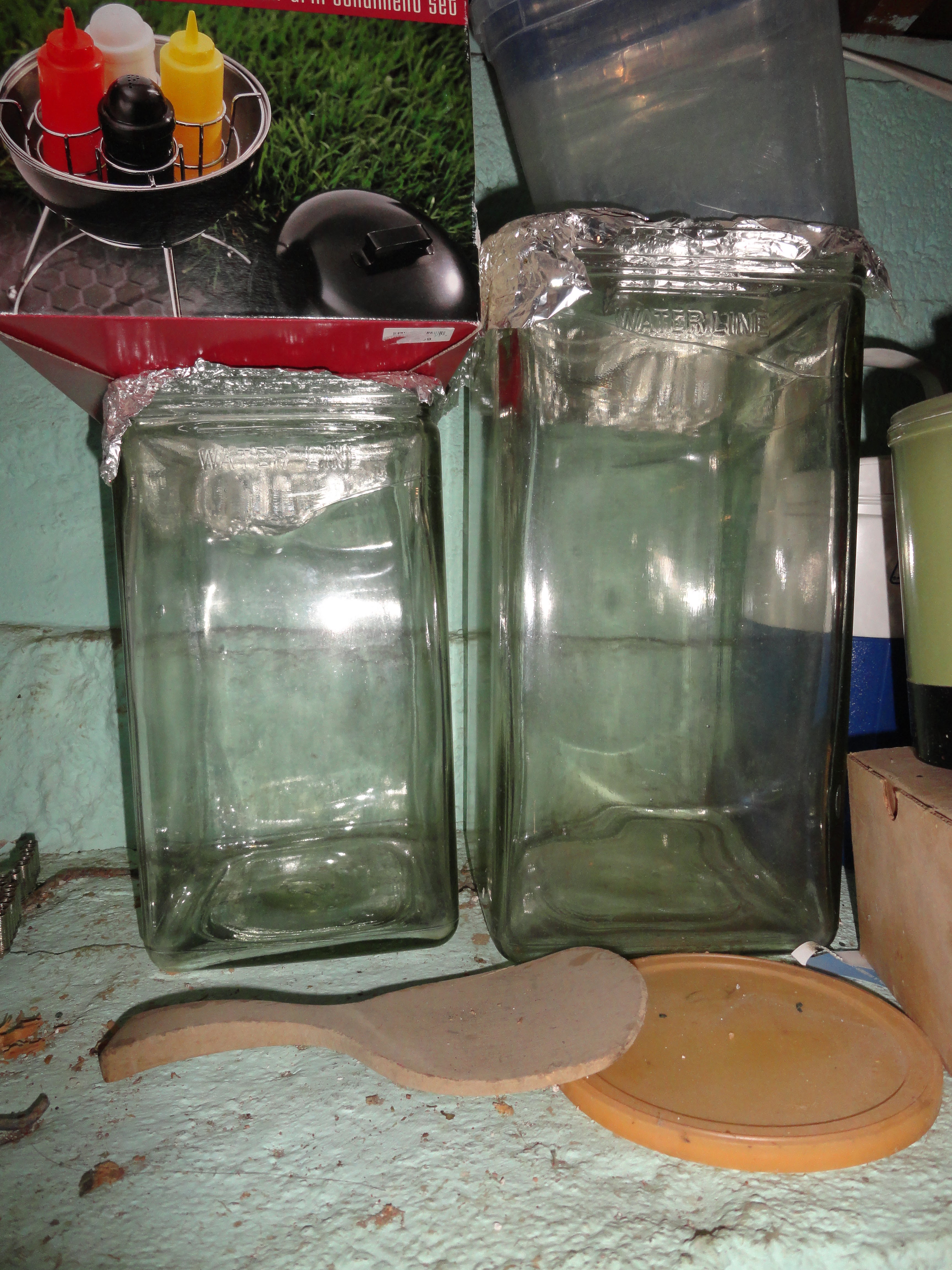
      In the basement was a wall of square glass jar batteries that measured about twelve inches square by a little over two feet high.  They stored power from a wind charger mounted on a thirty-foot galvanized angle iron tower about thirty feet east of the back porch to the house. 

     When the wind blew, as it often did, we had power.  The batteries kept the power going for a while when the wind died down.  When the batteries started to falter, Dad had a “light plant” in the shop he could start up and provide some limited amount of power.

      That all went away in the early 50’s.  The REA in the form of Mountain View Electric Association came to us in the early 1950’s.  Again, I hadn’t started school, so that had to be prior to 1953.

      A few things I remember about getting 110-volt electricity:  A narrow-front-end International tractor with a “Farmhand” mounted on it.  The Farmhand was a little different than the one we had.  It was triangular, with the main frame anchored to the back of the tractor and angling to a point in front of the tractor where a giant auger dangled like a great stinger on a bee.

      The tractor/auger combination was used to drill the holes for the line-bearing poles.  All this stuff, equipment, poles, cables, were huge in my eyes.  My attention must have wandered, for I do not remember how they lifted the poles into the holes, or how they tamped the soil back into the hole to anchor the posts, nor how they hung the wires except for one thing.  I remember guys climbing the wooden poles.  How?

      It seemed amazing that someone could mount a pole without a ladder.  When the pole-climbers were on the ground, a thick leather belt dangled from their waists.  I don’t think I ever got close enough to one of them to eye the hooks on their sturdy boots.  I do remember that after the climber got off the post, there were these divots in the pole with lots of chances to get stickers from the splinters the divots left.  The creosote the poles were treated with was also a repellant.

      The folks anticipated the advent of 110 volts into our lives.  They bought a few new appliances.  The one thing I remember for sure was the mangle iron Mom used to iron the sheets.  (Yes, they did iron the sheets in those days!  The mangle resides in the basement today.)  Our neighbors to the north, the Pratts, got live power sometime ahead of us. For a while, the mangle resided in the Pratt’s living room where Mom went to iron sheets and other stuff.

       Another “appliance” was a hair clipper which replaced the old scissor-squeezer clipper Dad used to cut our hair.  He had to squeeze the  handles together to make one set of teeth cross the other set of teeth.  Painful jerks of my  hair were guaranteed with the manual clippers.  (Maybe that’s where I learned to dread a haircut, which I still do, a little bit.)

    So it was that one time I was in the barber chair up at Pratt’s when an airplane landed on the “windmill road” east of our house, and I had to miss it all because I was in the chair and couldn’t see out the window.  That disappointment aside, the electric clipper was a great improvement over the manual clipper, even if we had to go to Pratt’s to use it.

     I also remember Milton White spending some time helping Dad wire the house, the old red barn, the shop, and the milk house.  The cable was the old black cloth (I think) wire treated with some kind of black stuff that left you with dirty hands after you handled it.

      The outlets and probably the lights in the shop, and some of the circuits in the house,  are still using that original wire.  There was supposed to be a wiring inspector who came to see that things were done according to Hoyle before the power could finally be turned on. 

      Dad had to provide access to all wiring, which included attics in the shop and the house.  I remember a plank “walk” he installed in the old red barn so the inspector could get up among the rafters and look at the wire.  I don’t think an inspector ever turned up.  Dad wasn’t too happy about going to all that trouble and not having it used.  On the other hand, there was no rejection of the job, no “punch list” that had to be completed before the power could be switched on.

     I don’t remember changing light fixtures or installing outlets.  I suppose I was shuttled out of the way somehow while all that was going on.  I don’t remember doing without lights during the transition from 32v DC to 110v AC.   

    I do not remember the first time the power came on.  I find it strange that I can remember many of the details of preparation but not the climactic event.

     One event I do remember, trying to pull some of the black wire, which was coiled up in the basement waiting to be installed or left over from the installation, up the basement steps.  I was a little more than half way up the stairs when the wire snagged somewhere and refused to go any farther.  In my impatience (something I have never cured), I gave the wire  mighty jerk.  The wire jerked back, I lost my balance and tumbled backwards down the wooden steps not covered in carpet remnants then. 


    Why was I trying to drag the wire upstairs?  I must have had some project in mind.  I had to be rescued from a coil of wire and comforted from my traumatic experience.    

     I also remember when the jar fell off the shelf with a crash.  Mom led me upstairs by the hand, very concerned, not letting go of me while she yelled out the back door to Dad who was welding in the shop.  Putting two and two together, I figure his welding caused the batteries in the basement to vibrate, which rattled the jar off the shelf.

      The jar contained acid used to replenish the batteries.  Mom inspected me.  I was pretty sure I suffered no injuries.  Nothing hurt.  I was free and clear.  Later, Mom found holes eaten into my jeans and my shirt.

     I have no recollection of the battery bank being removed.  I vaguely remember a jar or two crashing on the basement floor and the broken glass being picked up and put in the trash.

    Mom used one of the two surviving jars for pickling a few times.  She would put the cucumbers in the brine, put a plate on top of it all, and weigh the plate down with a good-sized rock which we had rescued from the roadside where the maintainer had pushed it.  The jar would sit for some time on the basement shelf before the pickles were canned.

    The jars sit, empty now, where they have sat for a long time, probably longer than they served in a battery “pack.”

         The etched and deteriorated spot on the basement floor is the only other reminder of that spill 70 years ago.


Sunday, November 14, 2021

Coincidences

      Six degrees of separation.  We can connect with anyone on the planet by going through six other humans.


     You aren’t going to believe this.  I don’t blame you.  I hardly believe it myself.

     It began two weeks ago when Rex answered a call wanting a quartet to sing Happy Birthday to a 100-year-old lady in Greeley.  When all four of us agreed to do it, he accepted the job.

      Today was the day.  But Rex’s daughter saw on Facebook this morning that the party had to be cancelled because the birthday girl, the centenarian’s daughter, also the arranger for all the party details, and  her daughter (centenarian’s granddaughter) all had COVID.  Ouch!

     Rex called to confirm the Facebook report, and alas, it was true.   The 100th birthday party was cancelled.  We had also planned to take our ladies out for supper at Biaggi’s when we returned from the party.  We had reservations for 6 o’clock.  No reason to cancel that, so we all showed up around six.

      We were having a good time and bantering with the waitress.  One of our number mentioned that we were a barbershop quartet.  She lit up and said, “Great!  We have a birthday guest who would appreciate you singing Happy Birthday to him.”

      We agreed to do that.  Ten or fifteen minutes later, two of the restaurant officials came to the table to ask if we were still game for the job.  When we answered in the affirmative, they led us to a back room.  We stepped in and Dick hit the pitch on his pipe and we launched into Happy Birthday.  “Happy Birthday dear Artie, Happy Birthday to you.”

      As we sang, I looked around the room and saw a guy who looked familiar.  I couldn’t remember his first name, but the last name was Hiltner and I immediately began looking around the room for anyone else that might  confirm my suspicion. 

      We ended that song and they stated yelling, “Encore!  Sing another!”  Rex asked if there happened to be a Mary Lou in the room.  Sure enough, there was a Mary Lou in the room.  So we launched into the barbershop version of “Hello Mary Lou” made famous by Ricky Nelson.

      Again as we sang, I looked around, and not six feet from me sat Jim Hiltner.  When we finished, I took two steps over and shook hands with Jim.  I asked him if he was related to everyone in the room.  He explained his relation to the birthday boy, Artie, and confirmed his brother Gene was also there.  He also said they had moved to Loveland and lived on the north side. 

     We didn’t have much time for a conversation since the host of the party was wanting to make a speech, so I left and returned to our table.  I had not been seated a minute or two before the hostess who had led us to the birthday party brought a bottle of wine to our table and said the birthday boy wanted to thank us for singing to him.

     That should have been the end of it.  It was surprise enough to run into two guys that I used to know from Eastern Colorado.  But in a way, it had only begun. 

     In another ten minutes, the birthday boy himself, Artie, came to our table to thank us.  And that should have been the end, but no.  He then asked me if I was the one from Genoa.  Nobody had mentioned Genoa.  I said yes and he said, “I’m from Flagler.  Are you Ottem?”

     Okay, he could have got my name from Jim.  But why had he bothered?  Why was he interested?

      I had to dig my eyelids out of my forehead and close my mouth a little to say “yes.”  When I said yes, he launched into a story about being in Greece back in the seventies when there was a coup with tanks roaming the streets, etc.  He was hanging out at the American Express office where many Yankees conglomerated to visit with their own kind when a girl with the name Ottem struck up a conversation with him.

      I quickly wracked my brain to think who would have been in Greece in the seventies.  Then it hit me; it was sister-in-law Michelle who was a foreign exchange student in Greece in the seventies.  I remembered her story of running into a guy from the Limon area and asking if he knew any Ottems.  He thought he did, from Genoa.

     I told him the story as I remembered it.  The girl wasn’t named Ottem.  It was the girl’s sister who was married to a guy of that name.  Patti and I remembered the story, the coup, the tanks, and we swapped remembrances for a minute or two.  Everyone was marveling at the coincidence, the implausibility of it all.

     After Artie left us to return to his birthday party, we shared stories of marvelous coincidences.  As in The Music Man, the barbershop quartet abandoned our ladies to go sing.       

     First, we sang for the waitstaff near the bar.  We returned to our table, but before we sat down, the hostess asked us to sing for the kitchen folk.  We followed her back to the kitchen and sang for chefs and their helpers.  We returned to our table and sang “Let Me Call You Sweetheart” to a lady at the table next to ours.  Our ladies suffered their embarrassment stoically.  Finally, we sang a tag, “Goodbye” to the front desk ladies and we left.

      When we were alone, we got to thinking about all that had just happened.   The cobwebs and rust didn’t disappear entirely, so I called Michelle to see if she could refresh my memory.   

        She thought she and Artie were standing in line together and struck up a conversation.  “Where are you from?”  When Michelle learned he grew up near Limon, she asked if he knew anyone by the name of Ottem.  He thought he did.

       The rest of the story as we recalled it:  Michelle’s mother was visiting Michelle in Greece when the coup occurred.  She got up that morning, looked out the window, saw the tanks and the soldiers, packed her bag and headed for the airport—leaving Michelle there to fend for herself.  (Not as harsh as it sounds.  Michelle was safely ensconced with a Greek family who knew the ropes.)

     In the end, I am surprised Artie knew our name in the first place.  He chalked it up to sports competition among small town schools.  I am even more surprised that he would remember that name, that incident, and that girl he met briefly fifty years ago in Greece.

      Artie has a good memory, I think.  Mine, not so good.  I didn’t remember to get his last name or a phone number.  Darn!


      Six degrees of separation?  I think it must be down to one degree, two at the most.